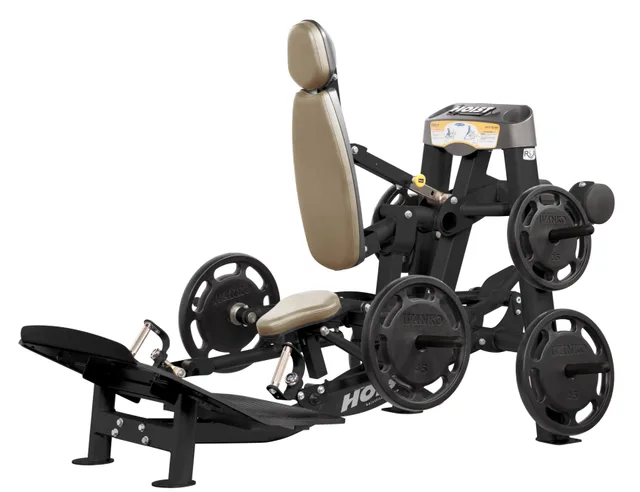
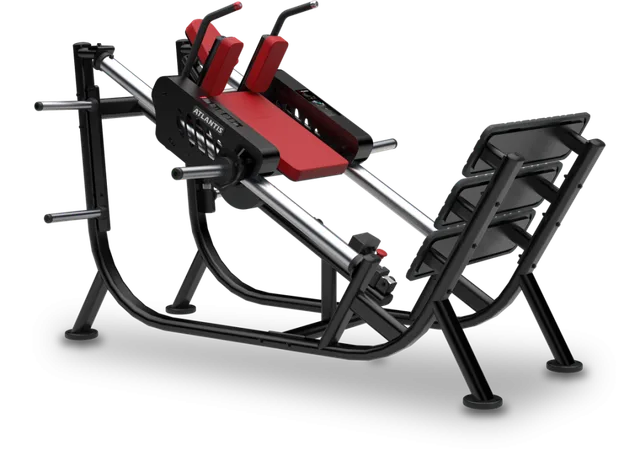
An empty hack squat has no universal starting weight. Match the machine’s exact model and manufacturer specification.
Use the source’s starting-resistance or take-off label. Whole-machine weight and plate capacity are different quantities, and unresolved manufacturer differences are shown below.
THE MODEL DIRECTORY
Find your hack squat machine
Match the brand and model code on the equipment label.
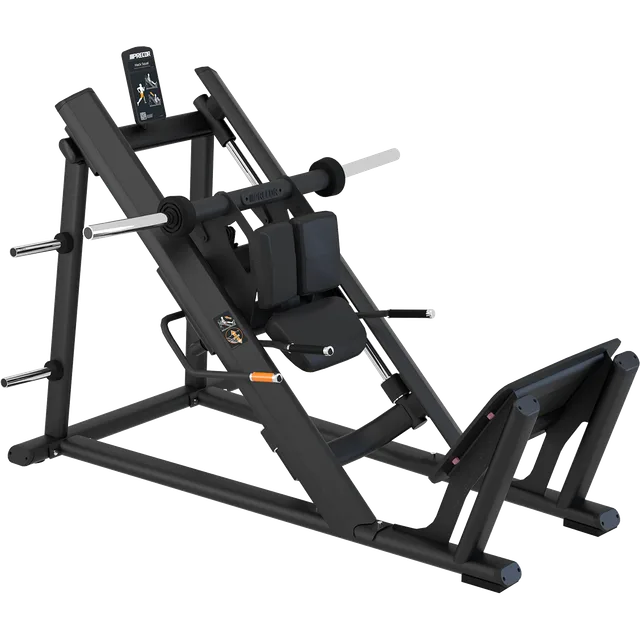
The model-specific page publishes Starting Weight separately from whole-machine weight and maximum lift load. Its distinctive upright hip-sled seating differs from the shoulder-pad carriage seen on some other hack squats; match DPL0603 on the label rather than relying on the exercise name. The published starting value does not by itself establish physical carriage mass.
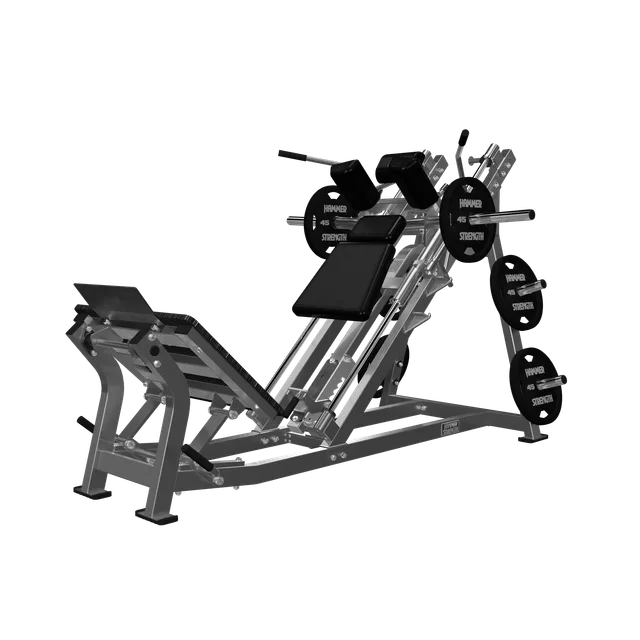
Unresolved manufacturer-source discrepancy for the same PL-HSQ2 code: the US page lists 125 lb / 57 kg with the qualifier per arm, while the Dutch page lists 7 kg. The UK page and official shop also list 125 lb / 57 kg but omit that qualifier. No explanation or version cutoff was verified. Do not double the US figure, infer a total or silently treat the Dutch value as corrected. Check the installed unit’s applicable documentation. Example plates in the photo are excluded from these published starting figures.
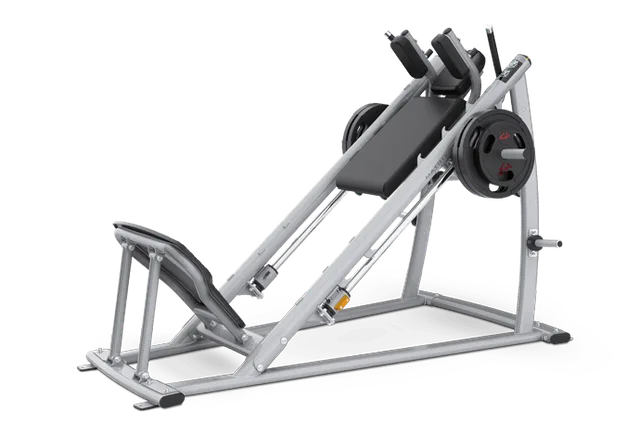
The manufacturer-hosted MG-PL71 sheet labels this pair Starting Resistance and separately identifies product, shipping and maximum training weights. This record is tied to that model-specific document. It does not establish a physical carriage mass or an equivalent barbell load. The official photo includes example plates.
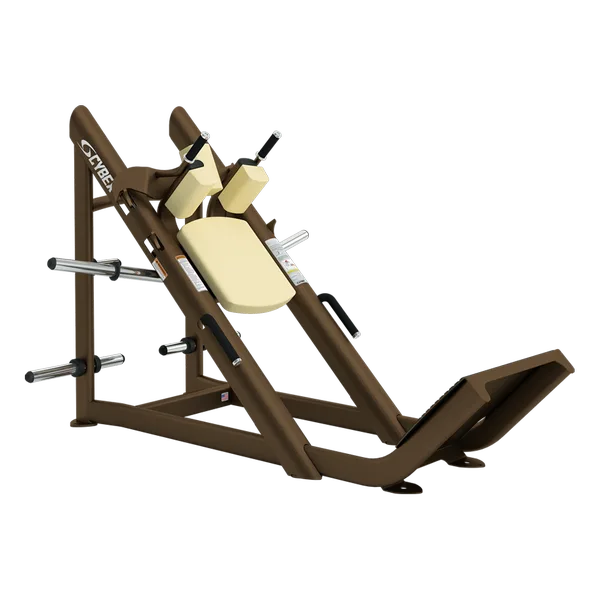
This is the legacy 16200 model. The same manufacturer row separately lists a 70% Effective Resistance Ratio; that percentage is not an extra weight or a new starting value. Adding plates to this figure is a nominal logging convention, not measured force. Do not apply an additional angle conversion.
Match RPL-5356 and machine code B09 in the manual. HOIST calls the starting weight approximate and separately gives a 70% Lifted Weight Ratio. Keep this label separate from plate mass or measured force; do not apply a second angle calculation. The current product photo identifies the model, not the applicable version. Example plates in the photo are excluded from the starting value.
Match the Power Series C412, not the different PW412 Hack Squat Pro. The current manufacturer page publishes 60 lb and 27 kg; these rounded unit labels are preserved. The whole-machine weight and maximum load are separate specifications and are not the starting resistance.
Sources checked
Use the exact model’s published starting label and configuration. These figures are not whole-machine weights or free-weight equivalents. Source disagreements and approximate values are explicitly identified.
START WITH THE LABEL
Identify your equipment.
Match the exact model before choosing a starting weight.
Read the full model label
Find the brand and code on the frame or placard. Compare the pad layout, foot platform, moving carriage and rack mechanism with the exact model photo.
Confirm the machine and its mode
Look up that model’s starting specification. On a combination leg press / hack squat, the documentation must identify the hack-squat mode; a generic carriage figure may not settle it.
Record the configuration and plates
Count plates on the moving loading horns on both sides. Note the machine, mode and logging convention. Bands, accessories or other configuration changes need their own documentation rather than an assumed adjustment.
WHAT THE NUMBER MEANS
The starting label matters more than a generic sled number
Hack squat machines do not all use the same carriage or pad layout. Many have shoulder and back pads above a foot platform; the Precor DPL0603 instead uses a distinctive upright hip-sled seat. Identify the code and rack configuration before choosing a starting value.
Manufacturer starting resistance, starting weight and take-off weight are preserved as different source terms. None is silently replaced with whole-machine weight, shipping weight or maximum plate capacity. A published starting label does not by itself establish the physical mass of the moving parts.
Cybex lists a separate effective resistance ratio alongside its take-off weight; HOIST likewise distinguishes starting weight from its lifted-weight ratio. Adding a published starting figure to nominal plate mass is a training-log convention, not measured force or a barbell equivalent. No extra rail-angle or ratio correction is applied here.
Rail angle, friction and mechanisms can differ between models. Keep comparisons tied to the same machine and configuration. Changing your facing direction is not evidence that the machine’s documented empty starting value has changed; check its permitted setup and source documentation rather than assigning a new number.
BEFORE YOUR NEXT SET
Common questions.
Does every empty hack squat start at 45 or 90 lb?+
No. The documented models publish different starting values. A familiar number is not a substitute for the model’s specification, and an unknown machine should stay unknown until its documentation is found.
Do I add the plates on both sides?+
Count all plates on the moving carriage’s working horns on both sides. Do not count plates parked on fixed storage horns. State whether your log records plates alone or plates plus the model’s published starting value; that total is a nominal convention, not measured force.
Is the machine’s total weight its empty starting weight?+
No. The full machine includes its stationary frame and other parts. Use the specifically labeled starting-resistance, starting-weight or take-off field for the exact model. Capacity and shipping specifications answer different questions.
Does a reverse hack squat automatically have a different empty weight?+
Facing another direction alone does not document a new starting value. Confirm the manufacturer’s permitted setup and whether the machine or its configuration actually changes. Do not assume a different apparatus or invent a revised number from the exercise name.
Can I use a leg-press value for a combination machine?+
Only if the manufacturer clearly states it applies to the hack-squat mode you are using. A shared frame or carriage does not by itself establish the starting value for every configuration.
What if two manufacturer pages disagree?+
Keep the figures attached to their source labels and check the installed machine’s applicable manual or specification. The Hammer Strength PL-HSQ2 record shows an unresolved regional-page discrepancy; neither an unverified correction nor a guessed version cutoff resolves it.
SOURCES, NOT GUESSWORK
How this guide is compiled.
Original manufacturer unit pairs and qualifiers are retained. When a unit is not published, the calculated equivalent is marked ≈.
Cybex is a legacy model reference. Matrix is supported by a model-specific manufacturer-hosted sell sheet. No current retail-availability claim is made for those records.
Example plates visible in manufacturer photographs are not included in the cited unloaded starting figures. Photo appearance alone does not establish a revision cutoff.
Checked 28 October 2026. No angle-based force calculation, inferred physical carriage mass, guessed mode adjustment or free-weight equivalence was used.