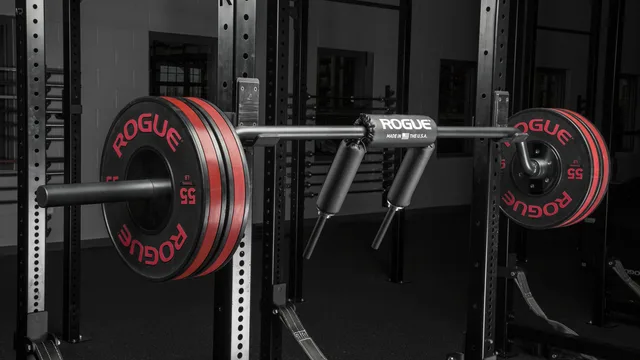
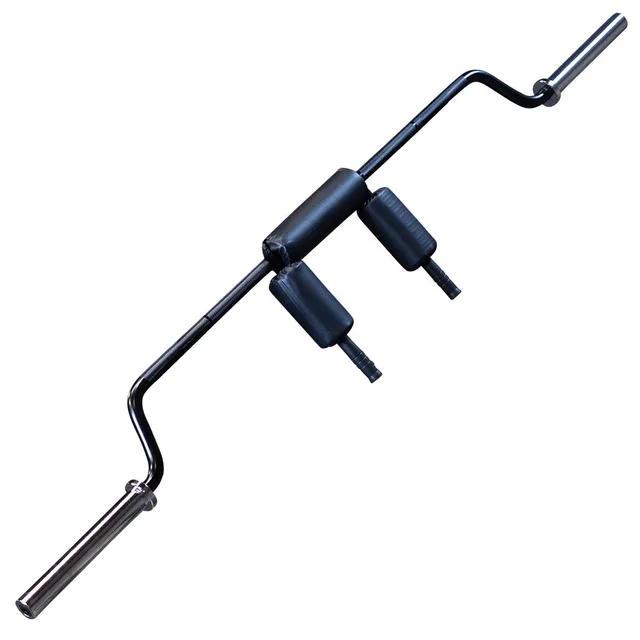
Rogue publishes 70 lb for the SB-1 padded safety squat bar. Its specification describes the formed handles, welded design and pads. The official photograph includes example plates and a rack; those are not included in the empty-bar figure.
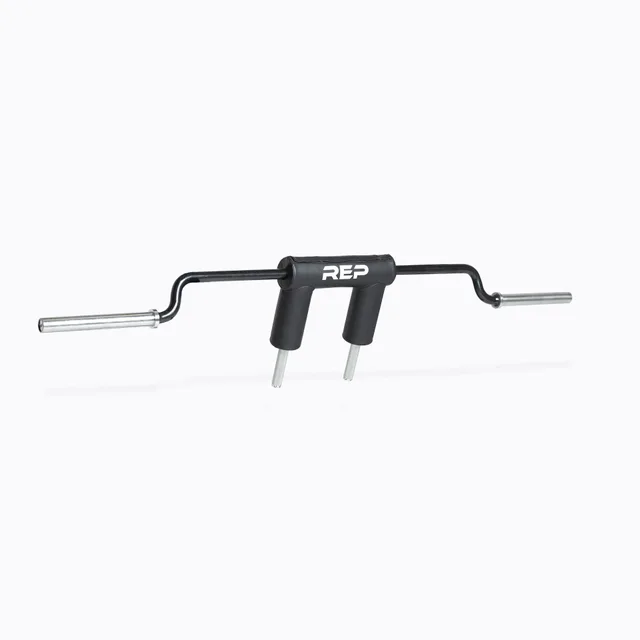
Unresolved manufacturer-source conflict: the US and EU product pages list 68 lb, while REP’s EU buying guide lists 29.5 kg and links to the same Safety Squat Bar. No explanation, assembly difference or verifiable version cutoff was found. The assembly FAQ describes fitting the pad and screwing in the handles; it gives no component masses to subtract. Check the exact unit and its applicable documentation before selecting a value.
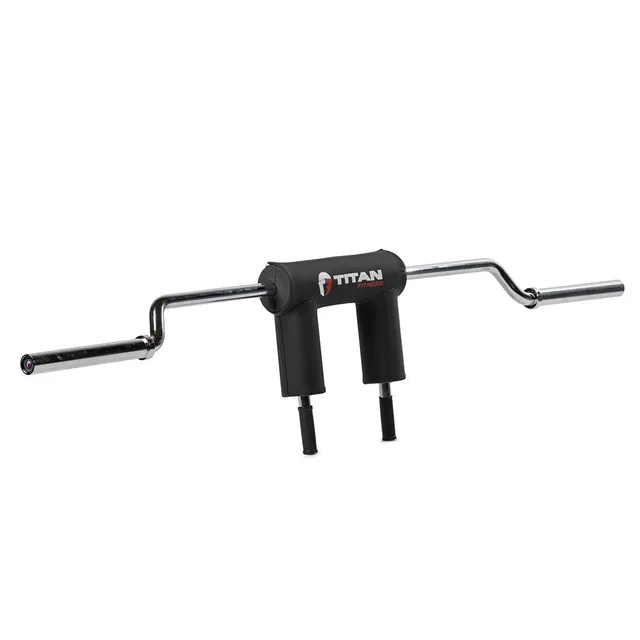
The current manufacturer listing identifies SKU 430410 and publishes 58 lb separately from load capacity. Titan’s support table maps this SKU to SSOBARv3. The older V2 URL now redirects here; this is a different reference from the older V2 SKU 430063, and its current photo cannot establish an older unit’s identity.
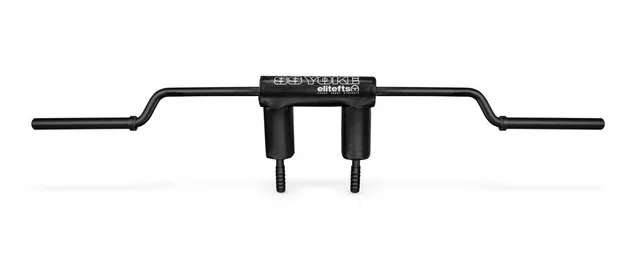
The manufacturer publishes 65 lb for the SS Yoke Bar. This reference image is the Black variant, SKU DS-BB-SSBAR-BLK. The product describes detachable handles; a bar with removed or substituted parts needs its own confirmed assembly weight rather than an assumed subtraction.
The current physical-specification table publishes 47 lb / 21 kg for OBSS50B and separately lists the 50 lb / 23 kg box weight. The manufacturer’s rounded kilogram value is retained. “Olympic” in the product name does not make this padded bar a standard 20 kg straight bar.
TAG identifies model BAR-SQUAT and publishes 55 lb in both the product description and linked model-specific brochure. That figure is separate from its test/load rating. The reference shows the padded bar with installed forward grips; it is not a squat machine or an ordinary unpadded cambered bar.
Sources checked
Match the complete bar with its fitted pads and handles. These are manufacturer specifications, not independent measurements. Conflicting figures remain separate; conversions are marked ≈.
START WITH THE LABEL
Identify your equipment.
Match the exact model before choosing a starting weight.
Start with the padded yoke and forward handles
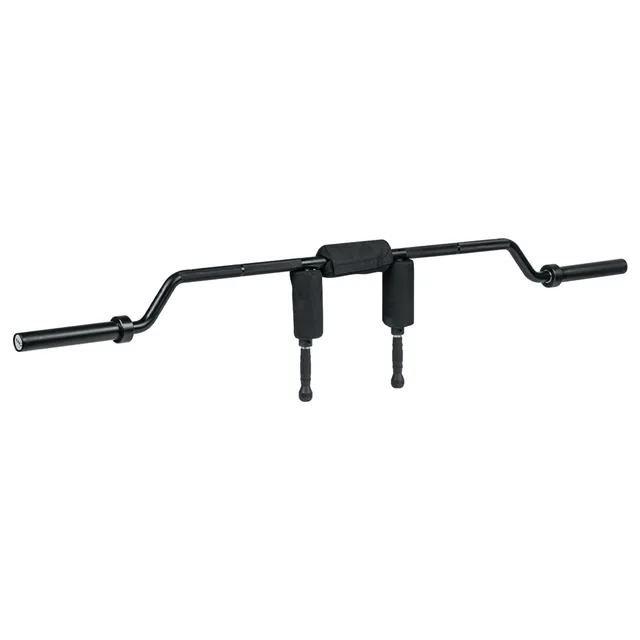
Look for the shoulder/neck padding, forward hand grips and cambered loading sleeves. These features help identify the safety squat bar category, but they do not establish the maker or empty mass.
Find the exact model or SKU
Check endcaps, pad branding, shaft markings and the gym’s inventory. Revisions matter: Titan’s current SKU 430410 is identified as SSOBARv3 in its support table, while the older V2 uses a different SKU.
Match the complete installed assembly
Compare the pads and handles with the exact manufacturer reference. If handles, padding or other parts have been removed or changed, do not subtract a guessed amount from the published figure. Ask for the applicable assembly specification.
Check source labels and disagreements
Use product or bar weight, not shipping mass or load capacity. If manufacturer documents disagree, as they do for REP BB-4600 here, keep the starting value unconfirmed until your exact unit and documentation can be matched.
WHAT THE NUMBER MEANS
Complete bar mass and a nominal training-log total
The relevant starting figure is the empty mass of the bar assembly you actually lift, before plates are added. Padding and handles are part of a safety squat bar’s configuration. A specification for a bar without handles cannot automatically stand in for the ready-to-use setup.
Once the complete empty weight is confirmed, add the plates on both sleeves in the same unit to record a nominal training-log total. Include accessories you are actually counting. This arithmetic does not establish the same training effect or difficulty as a straight-bar squat.
This guide preserves manufacturer rounding and keeps missing units separate from calculated conversions. It also retains source conflicts instead of averaging them or inventing production-year boundaries. A photo can support comparison, but it cannot resolve an undocumented version or missing parts.
BEFORE YOUR NEXT SET
Common questions.
Does a safety squat bar weigh 20 kg or 45 lb?+
Do not use either as a universal starting value. The named examples have different manufacturer specifications: Rogue’s SB-1 is 70 lb, while Body-Solid OBSS50B is 47 lb / 21 kg. Identify your exact padded bar first.
Are the handles and pads included in the empty weight?+
Match the manufacturer’s described assembly to the bar you actually have. If the source explicitly excludes handles, its figure is not a complete ready-to-use mass. If parts have changed and no applicable component or assembly mass is documented, leave the total unconfirmed.
Can I subtract weight when the handles are removed?+
Only use an applicable manufacturer figure or otherwise confirmed mass for that exact configuration. Do not guess the weight of a handle, a pair of handles or a replacement pad, and do not assume two versions use identical parts.
Why does the REP entry show two weights?+
REP’s US and EU product pages list 68 lb, but its EU buying guide links the same model and gives 29.5 kg. The discrepancy is unresolved. The guide does not average them, choose a version cutoff or claim a photo proves which figure applies.
Is the current Titan bar the old V2?+
The current product page identifies SKU 430410; Titan’s support table maps it to SSOBARv3. The old V2 URL redirects to that current page, while the older V2 support record identifies SKU 430063. Check the SKU rather than relying on an old link or similar shape.
Should I count the safety squat bar and both sides’ plates?+
For a nominal total external load, count the confirmed complete bar and all plates on both sleeves, using consistent units. Keep the bar model and logging convention in your notes, especially if you switch to another bar.
What if my gym’s safety squat bar has no readable model?+
Ask staff for its model, revision, purchase record or manual. Compare the original pads, handles and endcaps with an official reference. Keep its empty weight unknown if the model or installed assembly cannot be confirmed.
SOURCES, NOT GUESSWORK
How this guide is compiled.
Manufacturer sources checked 28 October 2026. These are published equipment specifications, not independent scale measurements; a source access date is not a manufacturing date.
Six exact model references are included: five have straightforward published product/bar weights and REP BB-4600 has an unresolved manufacturer-source disagreement. The two REP figures remain separate alternatives, not an original pound/kilogram unit pair.
Body-Solid’s rounded 47 lb / 21 kg pair is retained as published. Where a unit is not published, its calculated equivalent is marked ≈.
Shipping masses, capacity/test ratings, unpadded cambered bars and squat machines are excluded from the model weights. No undocumented handle or pad adjustment has been used.